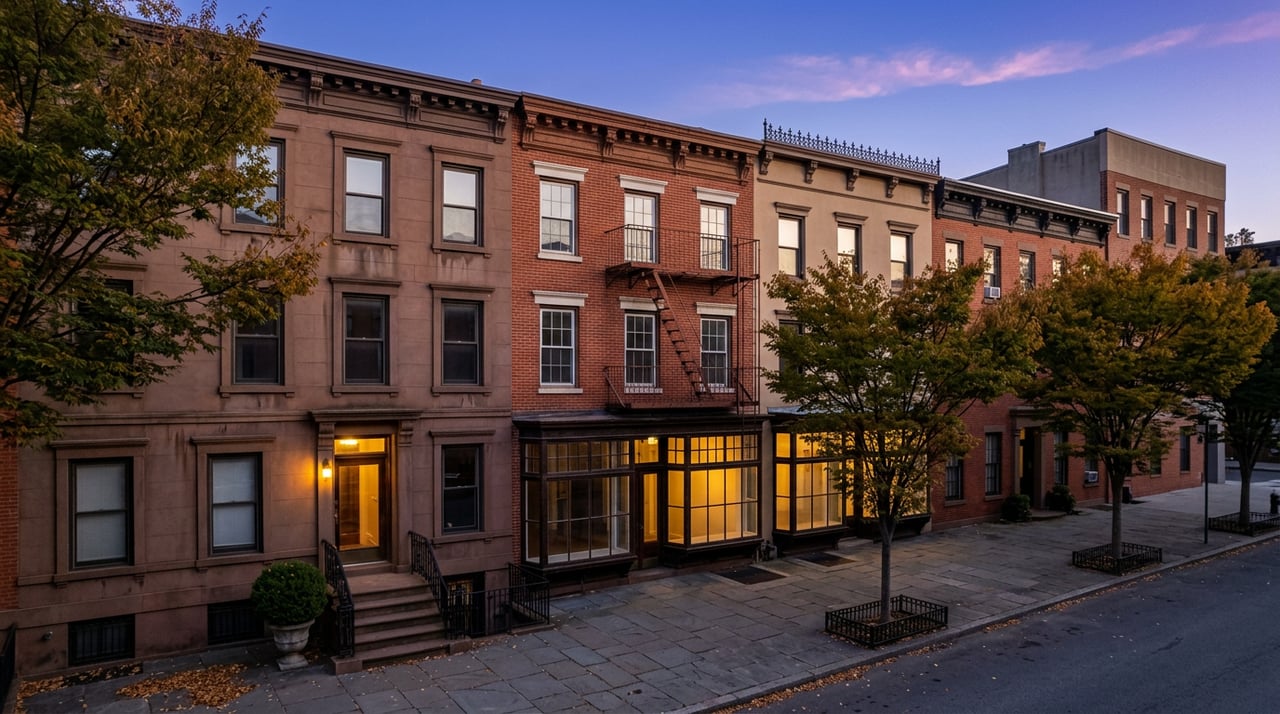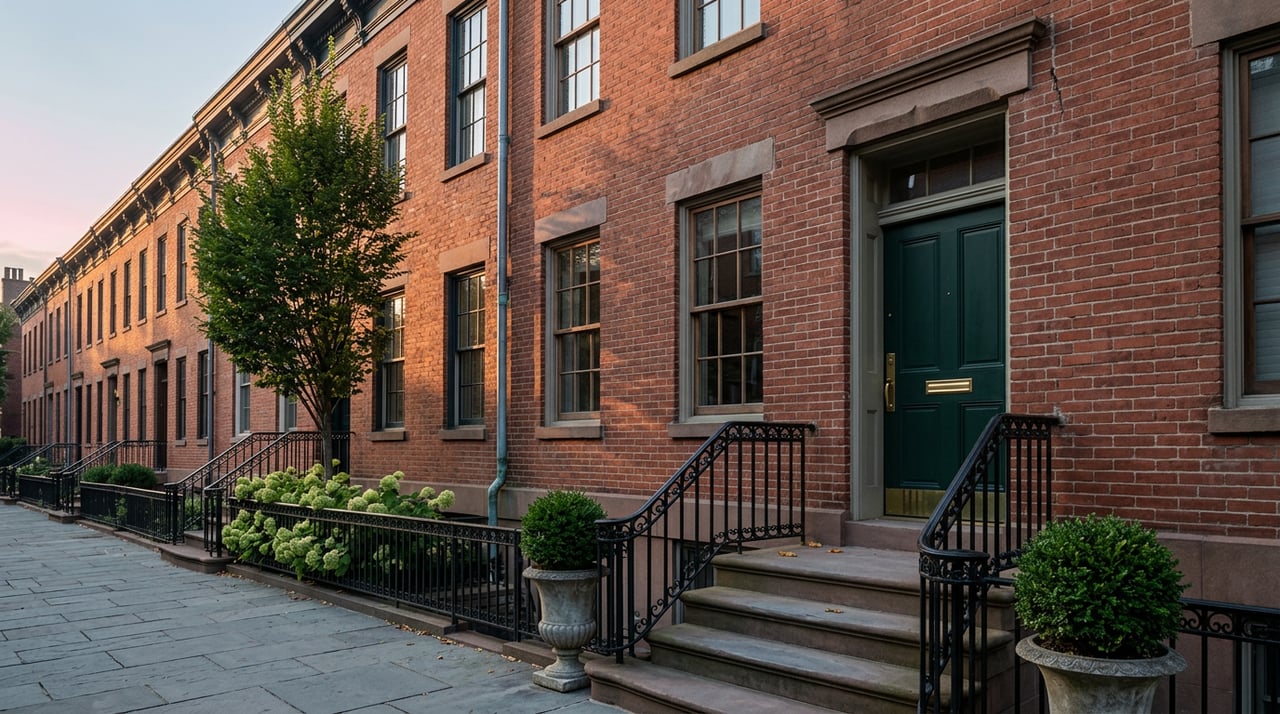
A five-story brownstone at 192 Columbia Heights changed hands this July for $24.5 million, according to public records reported by Hoodline. The buyer was an anonymous LLC listing a Manhattan law firm's address. The seller was tied to a private equity executive. The house sits a block from the Brooklyn Heights Promenade, spans roughly 7,900 square feet, and closed off market, without ever appearing on a public listing.
None of that money bought its new owner the right to touch the facade without asking first. The house sits inside the Brooklyn Heights Historic District, one of New York City's earliest, designated in 1965. Whoever owns it now, whether they spend a weekend there or gut it top to bottom, answers to the Landmarks Preservation Commission before the Department of Buildings will let a crew touch anything visible from the street. That's true whether the sale price is $24.5 million or $1.2 million. The clock doesn't care about the wire transfer.
Most buyers learn this after they're under contract, when a contractor or architect first mentions LPC review. By then, the renovation budget and moving timeline are already set on assumptions that don't hold. Here's the piece that actually matters, and the one that isn't in most explainers: the two agencies don't work at the same time.
The Permit That Comes First, Every Time
In most of New York City, a renovation permit is a Department of Buildings problem. You file plans, you wait, you build. In Brooklyn Heights, if the work is visible from a public way, the Landmarks Preservation Commission has to sign off before DOB will issue anything. These aren't parallel processes that both need to clear by move-in day. LPC review happens first, in full, and only then does the DOB clock start.
That sequencing is where renovation timelines actually break. A buyer who plans six weeks for permits because that's what a friend's Park Slope kitchen took has budgeted for a process that assumes DOB alone. Add a facade repair, a new stoop railing, or a rear addition that's visible from a neighbor's window, and the math changes completely, because now two agencies are involved and only one of them can start after the other finishes.
What Actually Triggers a Landmarks Review
Not every project needs LPC's blessing. The commission regulates exterior features visible from a public way, which in a rowhouse district covers more than most buyers expect and less than they fear. Work that typically requires review:
- Window and door replacement, including changes to opening size or muntin pattern
- Masonry repointing, cornice reconstruction, or facade cleaning
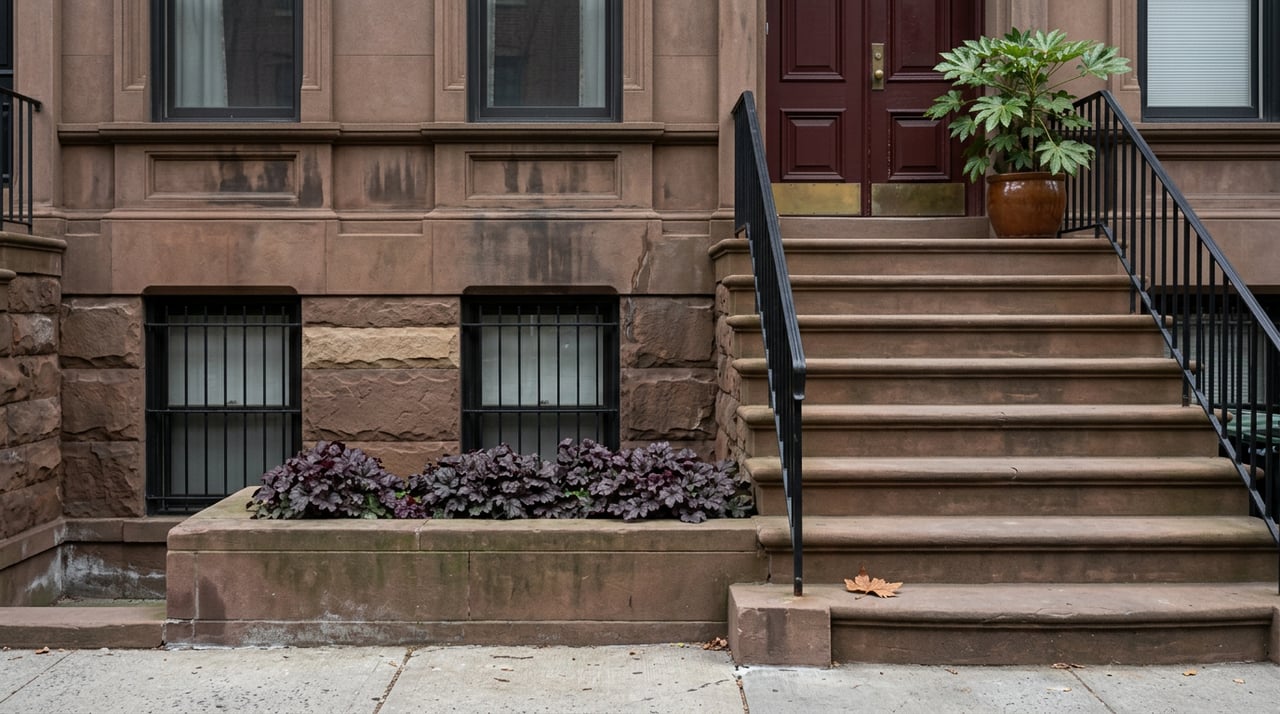
- Stoop and railing repair or replacement
- Rooftop additions, bulkheads, and mechanicals visible from the street or from a neighboring yard
- Rear extensions or rear facade changes, since visibility from adjacent yards and upper floors still counts
Work that generally doesn't:
- Interior renovations, including kitchens, baths, and layout changes, as long as the building isn't an individually designated interior landmark
- Routine repairs like replacing broken window glass or repainting to match the existing color
- Plumbing, electrical, and HVAC upgrades that don't touch protected exterior features
That last exemption matters more in Brooklyn Heights than it sounds. Most of the neighborhood's rowhouse stock still runs on original systems, and a full mechanical upgrade can move forward on a DOB timeline alone if nothing about it shows from the sidewalk.
Three Permit Types, Three Different Clocks
LPC doesn't issue one kind of approval. It issues three, and which one your project needs determines whether you're waiting weeks or waiting through a full public hearing cycle.
| Permit Type | What It Covers | Typical Timeline |
|---|---|---|
| Certificate of No Effect | Work needing a DOB permit that doesn't change protected features | Staff-level review, often a few weeks |
| Permit for Minor Work | Exterior changes that affect character but don't need a DOB permit | Staff-level review, no fee |
| Certificate of Appropriateness | Major alterations: additions, demolitions, significant facade changes | Full process runs about three months, per LPC's own guidance |
The fee structure adds another wrinkle worth budgeting for. A Certificate of Appropriateness or Certificate of No Effect costs $50 for the first $25,000 of work and $3 for every $1,000 above that, so a $50,000 renovation carries a $125 filing fee. That's the easy part. What most buyers underestimate is that only a small share of projects, roughly 5 to 10 percent of annual applications by LPC's own accounting, ever require the full public hearing. The rest clear at staff level. Knowing which bucket your project falls into before you close changes everything about how you plan the year ahead.
A Real Filing, Not a Hypothetical
To see what a full review actually looks like, consider a Greek Revival rowhouse at the corner of State Street and Sidney Place in Brooklyn Heights, completed in 1839. The rear elevation had deteriorated over more than a century and a half: crumbling masonry, invasive plants, rusted terrace guardrails. The owner's application proposed a new oriel window along Sidney Place designed to echo one removed in an earlier renovation, an enlarged third-floor window, a rooftop deck, a solar array, and an angled bulkhead to limit street-level visibility.
The Commission voted unanimously to approve it, finding the work wouldn't diminish the historic character of the building or the district. That's the scope of project that lands in front of the full Commission rather than clearing at staff level, and it's a useful benchmark for anyone evaluating a Brooklyn Heights brownstone that needs real rear-yard or rooftop work. If your renovation plans start to resemble that list, budget for a hearing cycle, not a staff-level letter.
What the Clock Costs
The time isn't the only cost. Renovating a landmarked property in Brooklyn typically runs 15 to 25 percent higher than an equivalent non-landmarked project, driven by the historically accurate materials LPC requires: custom wood window replicas instead of standard units, matched mortar and masonry instead of patch repairs. On top of that, most Brooklyn brownstones still carry original mechanical systems, and bringing those up to code commonly accounts for 25 to 35 percent of a full renovation budget on its own, separate from anything LPC touches.
The paperwork itself has a price tag before a single tool moves. LPC filing preparation typically adds $2,000 to $8,000 in fees and four to twelve weeks to the schedule before exterior work can start, and that's before the review process itself runs its course. For a project that needs a full Certificate of Appropriateness hearing, add another three to six months on top of that filing window. None of this replaces the DOB timeline. It sits in front of it.
Why the Median Doesn't Tell the Whole Story
Brooklyn Heights' own sales data shows this friction working itself into pricing. The median home sale price in the neighborhood came in at $1 million for the second quarter of 2026, down 8.8 percent year over year, on just 54 recorded deals, according to PropertyShark's neighborhood data. Median price per square foot held flat at $1,808. That's a soft topline number for one of Brooklyn's most expensive addresses.
At the same time, the neighborhood produced a $24.5 million off-market sale in July, a $6.5 million Hicks Street townhouse that drew an open house crowd in March, and a $4.9 million Cranberry Street wood-frame house listed in April with its Federal-era mantels and worn plaster left intact. The pattern isn't contradictory once you factor in the landmarks clock. Buyers are willing to pay full premium for a house that's already renovated, permitted, and move-in ready, because they know exactly what avoiding that timeline is worth. Dated stock that still needs facade work, window replacement, or a rear addition gets priced with the LPC calendar built into the discount, because the next owner inherits the paperwork along with the address.
That's the actual lesson in the median dropping while trophy sales climb. It isn't that the neighborhood is losing value. It's that the market has started pricing landmarks risk as its own line item, separate from square footage and separate from location.
Before You Write the Offer
A few habits separate buyers who plan around this from buyers who discover it mid-renovation:
- Confirm landmark status before you make an offer, not after. NYC's landmarks map will tell you whether a property is an individual landmark, inside a historic district, or carries an interior designation, and each comes with different rules.
- Ask the seller for any existing LPC approvals or permits already in hand. A house with an unused Certificate of Appropriateness on file can save months.
- Build your renovation timeline around sequential approvals, not parallel ones. If your architect or contractor quotes a schedule that assumes LPC and DOB run at the same time, ask them to walk you through how that's possible in a historic district.
- Bring in a contractor and inspector who have filed with LPC before. The photo documentation, material specifications, and drawing standards the Commission expects are specific, and an incomplete application is the single most common cause of delay.
A construction-informed read on a Brooklyn Heights property before you close, one that flags what's likely to trigger review and what isn't, can be the difference between a renovation that starts on schedule and one that sits behind a permit application for months.
FAQ
Does a full interior renovation need Landmarks approval? Generally no. Kitchens, baths, plumbing, electrical, and layout changes are typically outside LPC's jurisdiction unless the building carries an individual interior landmark designation, which is rare and applies mostly to a small set of notable lobbies and public rooms, not residential parlor floors.
How do I find out if a specific house is landmarked or just sits in a historic district? NYC's Landmarks Preservation Commission maintains an interactive map and a designation report for every landmark and historic district. Calling 311 and asking for the Landmarks Preservation Commission will also confirm a property's status directly.
Can I still add a roof deck or rear extension in Brooklyn Heights? Often yes, but it typically requires a Certificate of Appropriateness and full Commission review, since visibility from adjacent yards and upper floors of neighboring buildings still counts as public view in LPC's assessment, even when the space itself is private.
What happens if work starts before the certificate is issued? It can trigger a Department of Buildings stop-work order and a separate LPC violation process, along with fines and a requirement to restore the property to its prior condition. It can also create delays when the property is later sold or refinanced.
Whether you're evaluating a landmarked brownstone that needs work or one that's already been through the process, the numbers only make sense once someone walks the property with both a contractor's eye and a closing date in mind. The Castle Team combines construction-level inspection experience with hands-on transaction management across Brooklyn Heights and the rest of brownstone Brooklyn. Become a Castle Insider and request your free home valuation before you write the offer, not after.