
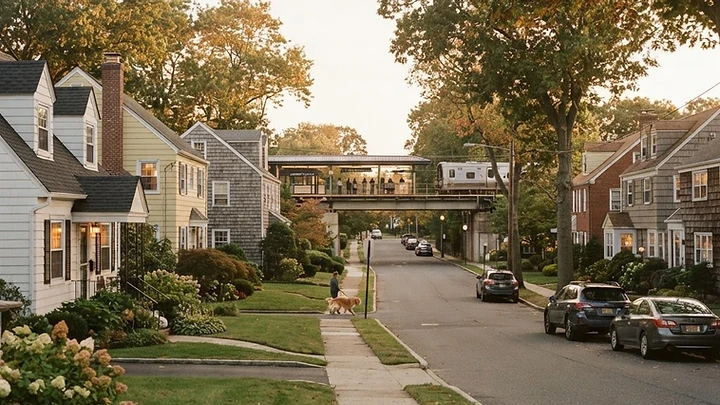
Ask most buyers what determines Long Island value and you'll hear about the commute. It matters — but it's the wrong headline. Two towns served by the same branch, the same travel time to Penn, can sit in completely different price universes. The variables that actually move Nassau and Suffolk values are more local than the train schedule, and knowing them changes both how you shop and how you sell.
School districts carry the biggest weight
Nothing prices a Long Island town like its school district. Buyers with children — and buyers thinking ahead to resale — consistently pay a premium for districts with strong reputations, and the premium compounds: the same style colonial can vary enormously in value across a single school-district line, even when the blocks look identical. It cuts both ways, too. A home zoned to a less sought-after district in an otherwise hot town stays affordable precisely because the market expects it to.
If resale is anywhere in your five-year plan, weight the district accordingly. The home you love can be renovated; the zone it sits in cannot be changed.
Taxes are the second conversation in every deal
Long Island's property taxes are among the highest in the country, and they shape value in a way many relocating buyers don't expect. Two factors dominate: the tax load itself, and whether the home's assessment is fair. Over-assessed properties drag on affordability for the current owner and can become an opportunity for a buyer willing to pursue a grievance — but that's a conversation to have with real numbers, before contract, not after closing. Sellers should know their own assessment status going into listing season, because educated buyers will ask.
Housing stock is a value engine of its own
Nassau and Suffolk are dominated by colonials, capes, ranches, and split-levels built in the postwar boom, and the market prices them by what they can become, not just what they are. A cape with expansion potential — the second floor, the basement height, the lot that allows it — competes in a different tier than the same cape capped out. Condition matters, but so does the ceiling: buyers with construction experience read these homes for what a renovation unlocks, and they bid accordingly.
The same logic drives the two-family market. Legal rental setups in Nassau and western Suffolk keep drawing investor and first-time-buyer demand because the income changes the affordability math in a way no finish package can.
The commute still matters — but as a multiplier
The LIRR is real value, particularly since remote-hybrid schedules made three-day commutes tolerable. But its effect shows up as a multiplier on everything above, not as a driver on its own. A difficult commute punishes an otherwise strong town; an easy one amplifies a weak district less than you'd hope. Buyers weighing two towns should price the whole bundle — district, taxes, stock, and access — and sellers should market all four, because the winning listing is the one that answers every question in one place.
The Castle Team works these factors at the town level across Nassau and Suffolk — what's actually selling, what's actually sitting, and why. Whether you're buying your first cape or selling the home you raised a family in, start with a conversation.