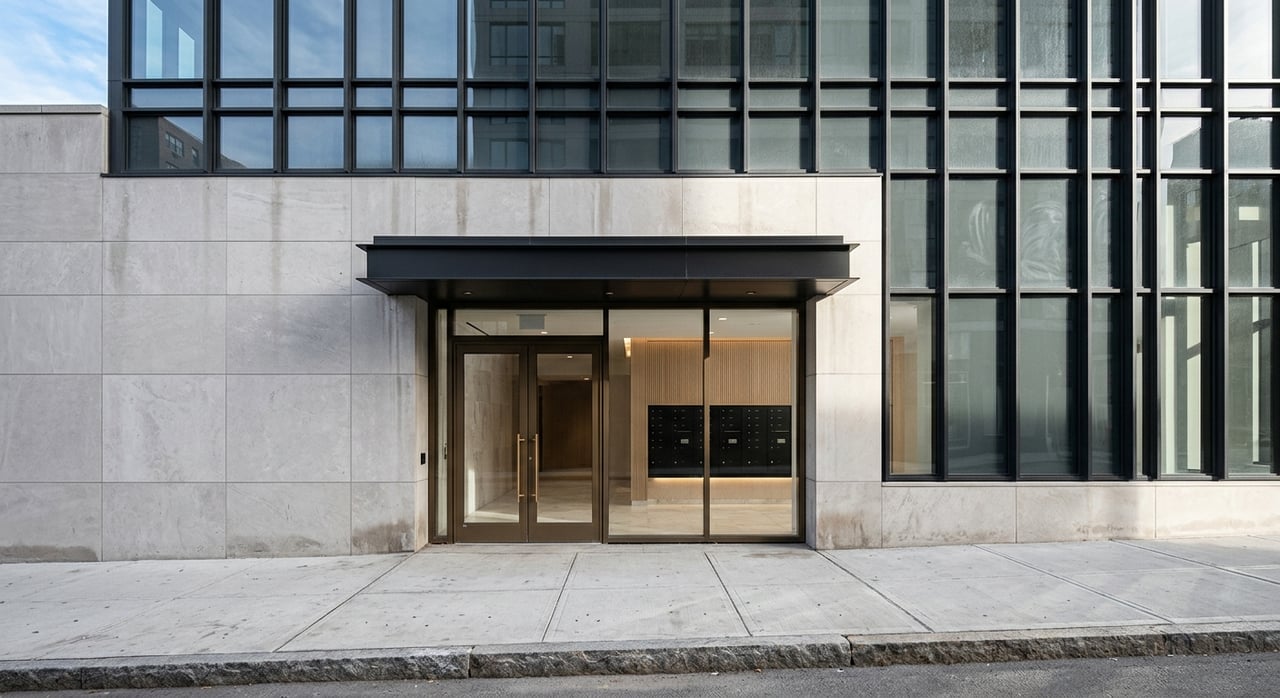
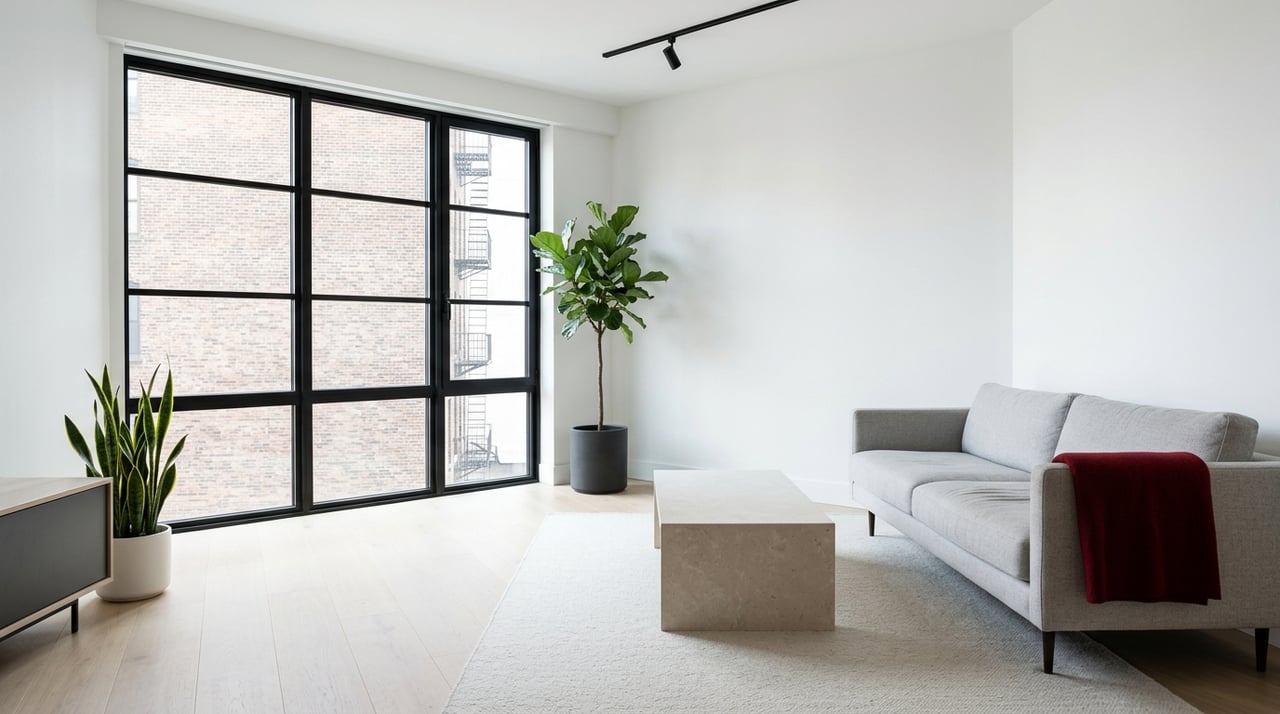
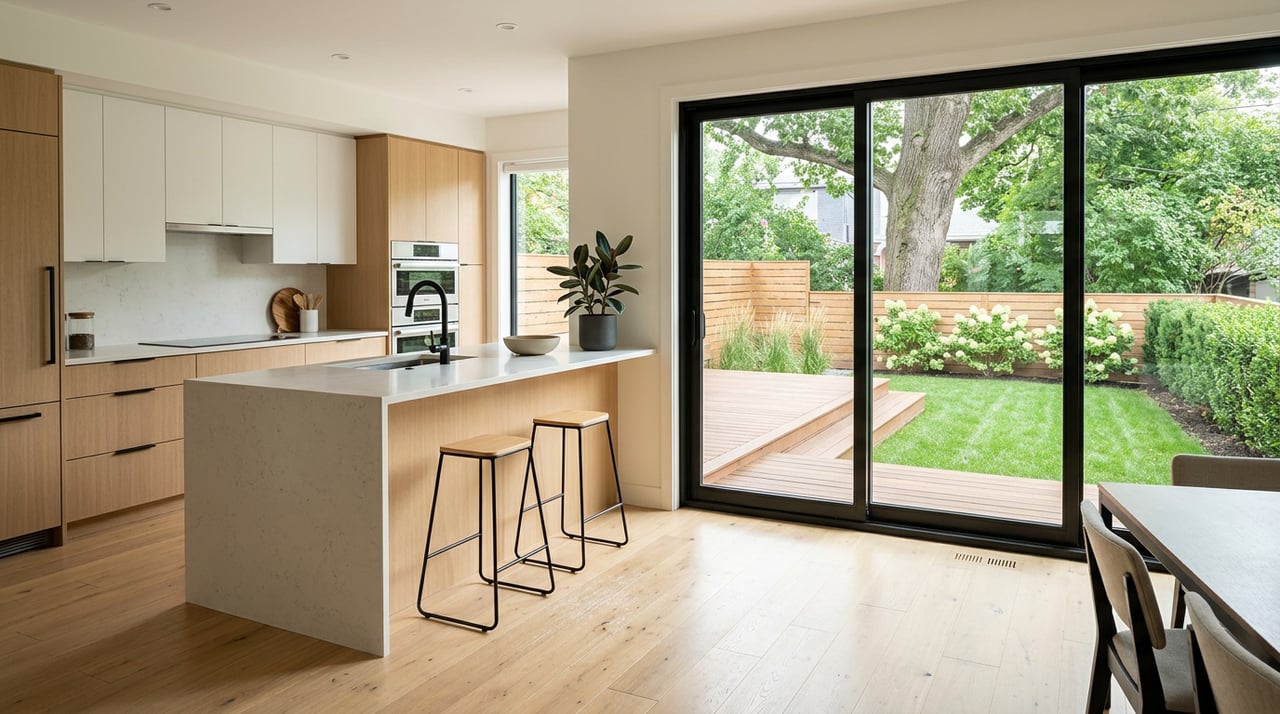
Gracing the Upper West Side's "prestigious skyline," 10 West End Avenue stands as a sleek, 33-story glass and limestone tower, a testament to modern design and "sophisticated living." Its listings promise breathtaking Hudson River vistas, high-end finishes, and a collection of "unparalleled amenities," from a 50-foot swimming pool to a state-of-the-art fitness center. It is the very picture of contemporary Manhattan luxury. But what if this polished facade concealed a far more complex and fascinating story of industrial grit, political struggle, and urban transformation? This article reveals five of the most surprising truths hidden in the history of this single address, showing how its past is a microcosm of New York City itself.
--------------------------------------------------------------------------------
1. Before Luxury Condos, There Were Auto Shops and Warehouses
The site of 10 West End Avenue and its neighbors was not always a coveted residential enclave. In fact, until the early 2000s, living here was strictly forbidden by law.
According to a 2004 City Planning Commission document, the area was previously an M1-6 light manufacturing district where residential uses were not allowed. Instead of doormen and dog walkers, the block was home to an "automotive service station," an "auto repair garage," and a "warehouse building." The construction of this residential tower was only made possible by a significant and deliberate rezoning action that transformed the neighborhood's fundamental character from industrial to high-density residential and commercial.
--------------------------------------------------------------------------------
2. The Building's Debut Included Sinkholes and Major Flooding
While today it offers a "full-service luxury condominium experience," the building's debut was marked by some surprisingly gritty on-the-ground problems. Shortly after opening its doors, the building's own property manager appeared before Manhattan's Community Board 7 to report a litany of infrastructure failures right outside their front door.
The meeting minutes from June 3, 2008, capture the raw reality of a neighborhood in transition, summarizing the manager's urgent complaints:
Gerard Martin, 10 West End Avenue property manager - Problems with the drainage on WEA at W.59th and W.60th Street, sinkholes have developed, leading a truck to fall into the street, major flooding going over the manholes; the area is dark and needs more streetlights.
This report provides a potent reality check on the often-glamorized process of launching a new development, revealing the immediate, practical challenges that can arise when a former industrial zone is reborn without the corresponding upgrades to decades-old municipal infrastructure.
--------------------------------------------------------------------------------
3. Residents Fought a Political Battle to Remain in the Upper West Side
In 2013, residents of 10 West End Avenue found themselves in an unexpected political fight. A proposal to redraw City Council district lines threatened to move their building from District 6 (Upper West Side) into District 3, which covers Hell’s Kitchen down to Canal Street. Residents quickly organized, flooding the city's Districting Commission with emails.
Their primary fear was losing their "governmental voice" and ability to influence the massive Riverside Center development—a project slated to take years to complete—which was rising directly across the street but was set to remain in District 6. Other concerns included a loss of community identity with the Upper West Side and potential impacts on school zoning. The emails, filled with passion and a sense of civic duty, show how deeply the residents felt about their neighborhood identity. One resident powerfully articulated the feeling of being misplaced:
"If you stood in front and faced 10 West End Avenue... and looked to your left, you would see our neighborhood as an integrated, sensible, understandable whole. That is the District we now belong in... Putting our building into District 3 would be like placing a redwood tree in the middle of the pine barrens. We would truly be displaced."
This episode is a surprising display of civic action, demonstrating that even in an established luxury building, the fight for neighborhood identity and political representation can be fierce.
--------------------------------------------------------------------------------
4. Special Engineering Was Required to Make It Quiet Enough for Living
Transforming a former industrial zone into a comfortable residential one involves more than just new construction; it requires overcoming the environmental legacy of the area's past. The legacy of an industrial zone is not just in the memory of warehouses and auto shops; it's in the ambient noise of the surrounding infrastructure that remains. City Planning Commission documents reveal that an "(E) designation" for noise was placed on the lots where 10 West End Avenue now stands.
This designation mandated specific engineering solutions to protect future residents from excessive noise. For the lots where 10 West End Avenue would be built, the building was required to provide a "closed window condition" with a minimum of 35 dB(A) of window and wall sound attenuation. Neighboring lots within the same rezoned midblock area required a minimum of 30 dB(A). This meticulous planning was designed to ensure that the interior noise level in all future residences would not exceed 45 dB(A), an acceptable standard for a living environment. To make this possible, the building also had to provide an "alternate means of ventilation," such as central air conditioning. This technical detail is fascinating because it uncovers the hidden environmental and engineering challenges that must be solved to make modern urban living comfortable and safe in post-industrial landscapes.
--------------------------------------------------------------------------------
5. Its Neighborhood Was Forged Through Decades of Displacement
The story of 10 West End Avenue is part of a much longer, multi-generational history of urban transformation in Lincoln Square—one that is deeply intertwined with displacement. Before the area became a "Performing Arts epicenter," it was a community called San Juan Hill, which in the early 1900s was a "predominantly African-American and Afro-Caribbean community."
In the 1950s and 60s, an "urban renewal plan" led by powerful figures like John D. Rockefeller III and Robert Moses initiated the construction of Lincoln Center. While this created the world-renowned cultural hub we know today, it also led to the displacement of "many of the longstanding residents" of San Juan Hill, who were moved to areas like Harlem and the Bronx. The development of 10 West End Avenue, built on land once zoned for industry, is another chapter in this continuous story, where the creation of a new neighborhood character often comes at the expense of an old one. This adds a crucial and sobering layer of historical context to the gleaming tower.
--------------------------------------------------------------------------------
Conclusion: A Building's Blueprint is a City's Biography
A building is never just steel and glass; it is a repository of history, conflict, and change. The story of 10 West End Avenue—from its industrial origins and infrastructure woes to its residents' political battles and the deep history of its surrounding neighborhood—is a microcosm of New York City's constant, complex, and often contentious evolution. Its foundation rests not just on bedrock, but on layers of zoning laws, community activism, and the memories of communities that came before.
The next time you walk past a gleaming new tower, what hidden histories of struggle, change, and community might you wonder about?